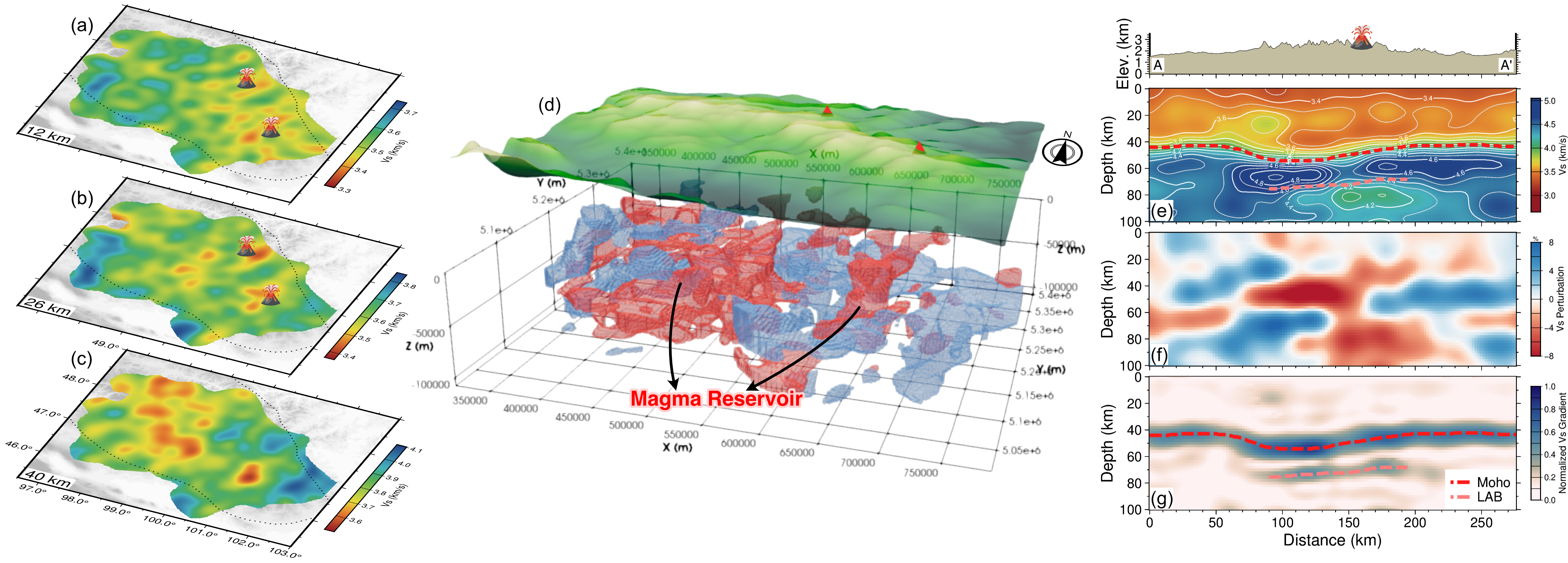
Multilevel Mechanisms Driving Intraplate Volcanism in Central Mongolia Revealed by Adjoint Waveform Tomography of Receiver Function and Ambient Noise Data
Abstract
The genesis of the Cenozoic intraplate volcanism in Central Mongolia, characterized by sustained and lowvolume eruptions remains debated due to the lack of a comprehensive model to interpret the Cenozoic volcanic activities. Here, we introduce a high-resolution 3D velocity model of the Hangay Dome, using a novel joint method which combines receiver function adjoint tomography and ambient noise adjoint tomography. The small-scale low-velocity zones in the crust and uppermost mantle reveal a crustal magma reservoir and partially molten subcontinental lithospheric mantle (SCLM). Melt fraction estimation indicates low-degree partially molten crust and SCLM. Combining previous geophysical and geochemical observations, we suggest that the volcanism in the Hangay Dome is driven by multilevel mechanisms. The remnant Mesozoic volatiles triggered upper mantle upwelling. This upwelling accumulated in the asthenosphere, heating the SCLM, and prompted its low-degree partial melting. The molten SCLM caused local lithospheric thinning and facilitated the magmatic underplating in the lower crust, eventually leading to the formation of the crustal magma reservoir.
Introduction
Intraplate volcanism, occurring far from tectonic plate boundaries, remains one of the most intriguing phenomena in solid earth geophysics. The Hangay Dome in Central Mongolia serves as a prime example of such activity, featuring dispersed Cenozoic basaltic eruptions within a high-elevation plateau. Despite extensive research, the driving mechanisms behind this volcanism—whether linked to deep mantle plumes, lithospheric delamination, or edge-driven convection—are still debated.
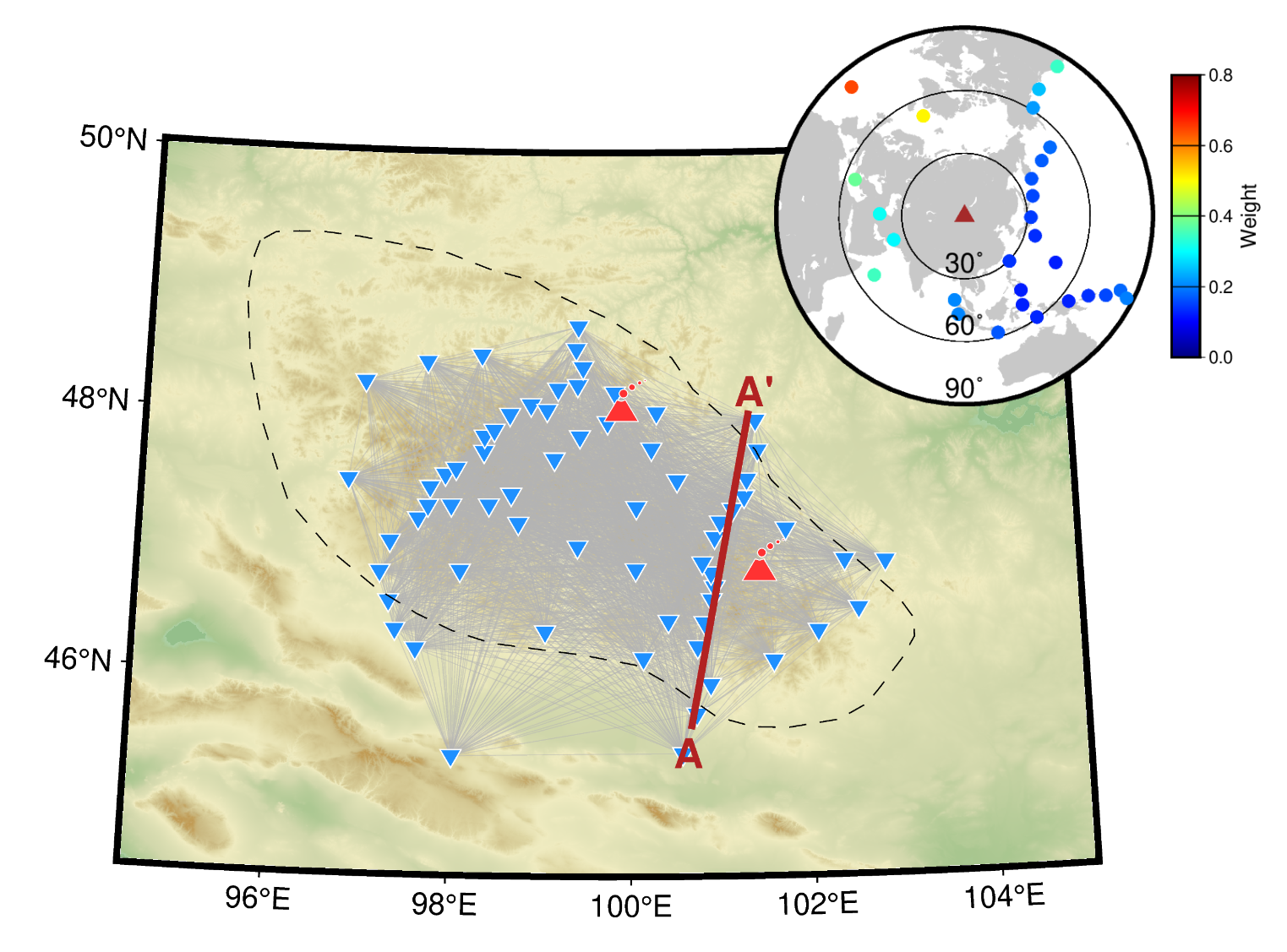
Figure 1: Tectonic setting and station distribution in the Hangay Dome region.
To address these ambiguities, high-resolution imaging of the crust and upper mantle is essential. Traditional travel-time tomography often lacks the resolution to image small-scale heterogeneities like magma reservoirs. In this study, we develop a Joint Adjoint Tomography approach, which combines two complementary seismic datasets, revealing detailed structures from the surface to the upper mantle.
Methods: Joint Full-waveform Adjoint Tomography
We integrate two complementary datasets to constrain the lithospheric structure from the surface down to the upper mantle:
- Receiver Functions (RFs): Sensitive to vertical velocity gradients.
- Ambient Noise Cross-correlations: Provide constraints on absolute shear wave velocities, particularly in the crust and uppermost mantle.
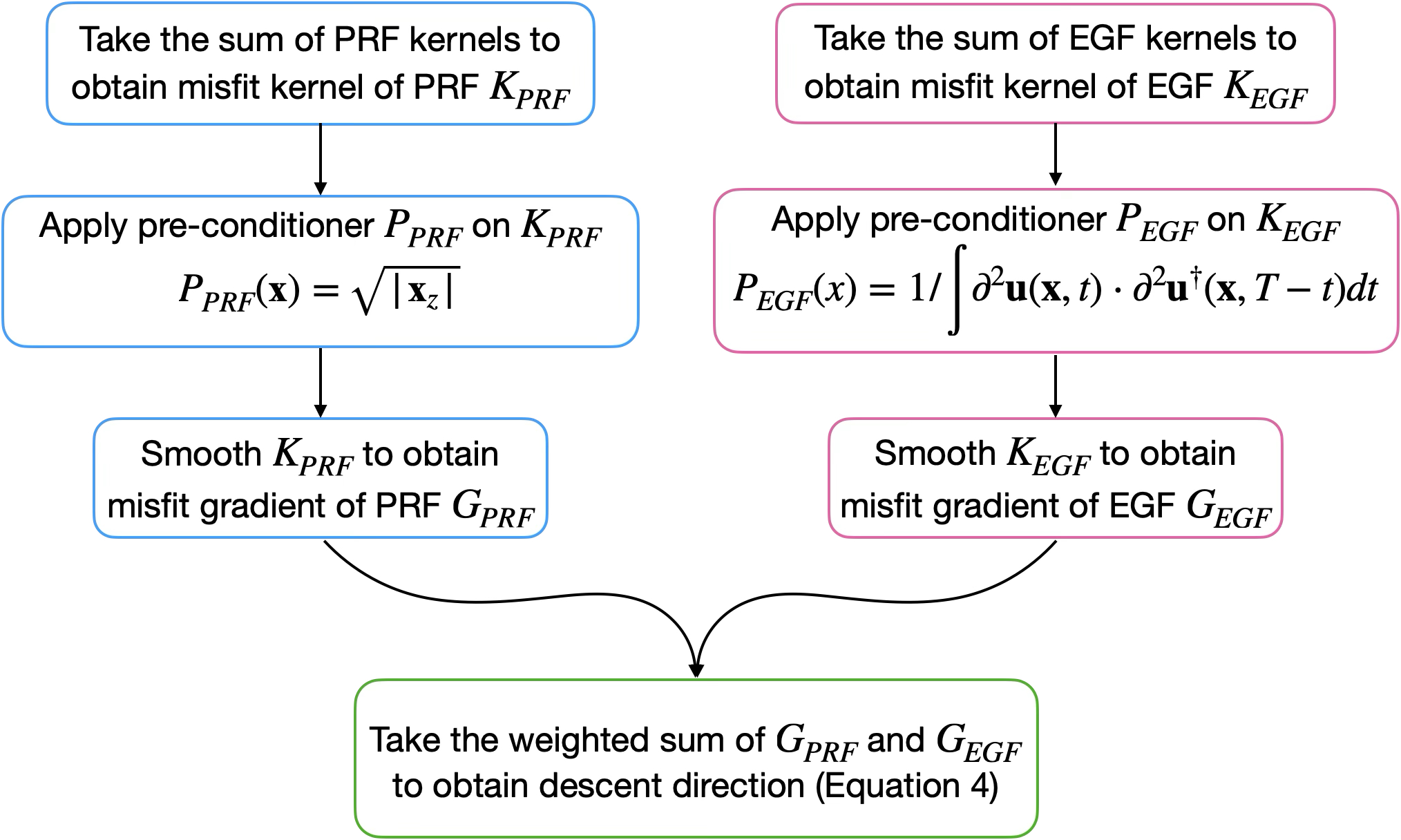
Figure 2: Workflow of the joint adjoint tomography.
The inversion minimizes the frequency-dependent phase misfit between observed and synthetic waveforms. We use Specfem3D to perform numerical simulations of wave propagation, incorporating surface topography and 3D heterogeneities. The gradients (misfit kernels) are calculated using the adjoint state method, and the model is iteratively updated using L-BFGS optimization.
Results: High-Resolution Velocity Model
Our final 3D shear-wave velocity model reveals detailed structural features beneath the Hangay Dome:
- Crustal Low-Velocity Zones (LVZs): We identify distinct low-velocity anomalies within the mid-to-lower crust. These are interpreted as the presence of a crustal magma reservoir.
- Uppermost Mantle Structure: The Subcontinental Lithospheric Mantle (SCLM) also exhibits significant low-velocity features, suggesting potential modification by thermal anomalies.
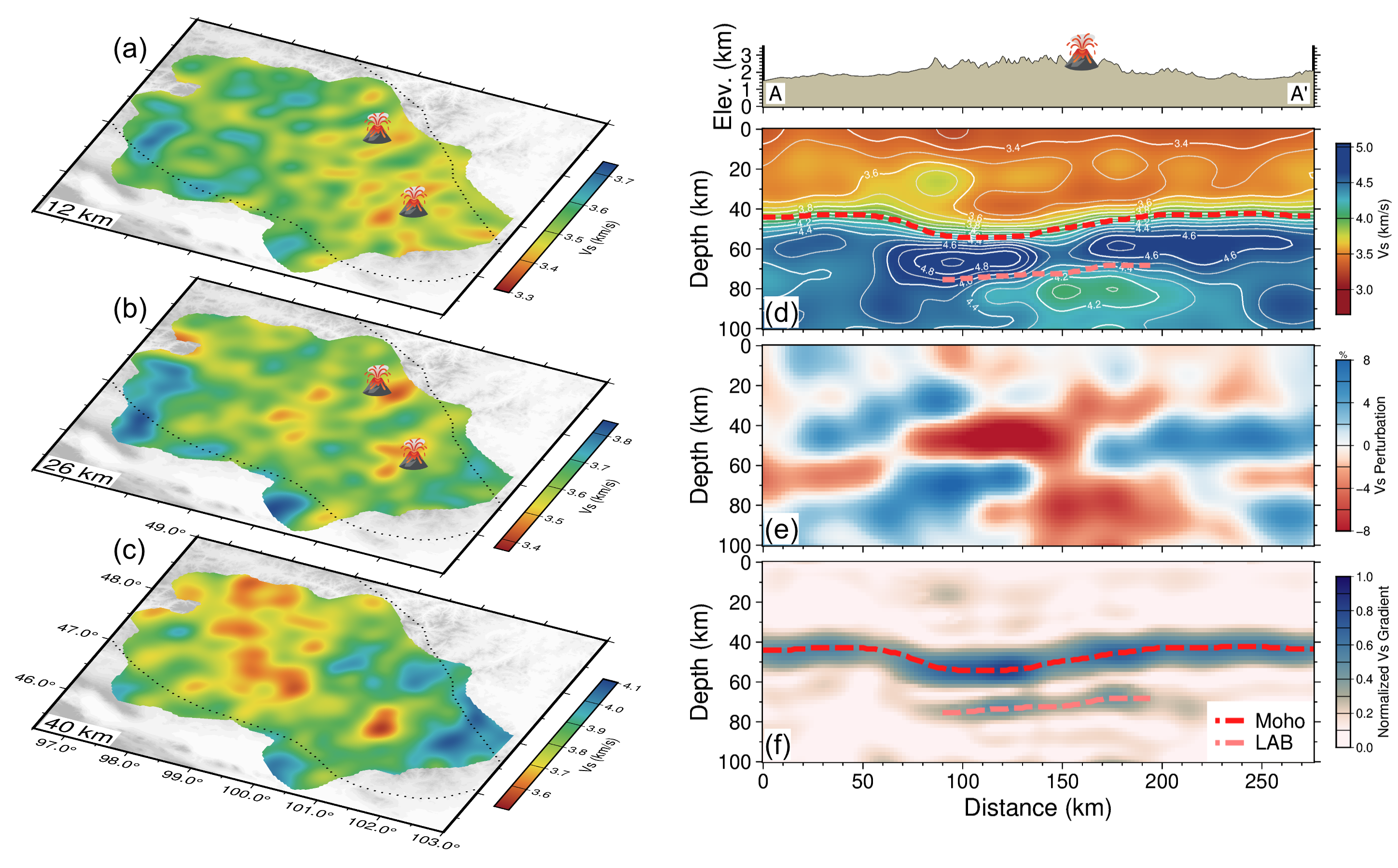
Figure 3: Horizontal slices (a-c) and vertical cross-sections (d-f) of the S-wave velocity model.
Resolution Tests
In the resolution test, we introduce alternating perturbations with a maximum amplitude of 8% to M10 to generate the perturbed model R00 (Figures 6a-6d). We then employ the ANAT, RFAT, and JointAT methods to invert the true data starting from R00, resulting in REGF (Figures 6e-6h), RPRF (Figures 6i-6l), and RJoint (Figures 6m – 6p). With respect to ANAT, REGF demonstrates superior lateral resolution in the crust, yet lacks resolution in the uppermost mantle. As for RFAT, RPRF displays commendable vertical resolution from crust to uppermost mantle, specifically under a dense linear array. JointAT leverages the complimentary resolution of ambient noise data and receiver functions. Rjoint has the capacity to not only resolve lateral anomalies in the crust but also illuminate anomalies under the dense linear array down to the uppermost mantle. This test suggests that the JointAT offers superior resolution compared to ANAT and RFAT used individually (Figure 6), and has been shown to achieve accurate and high-resolution results in resolving lateral heterogeneity in the crust and the uppermost mantle. However, the JointAT still presents irregular resolution due to imperfect data coverage in our study area.
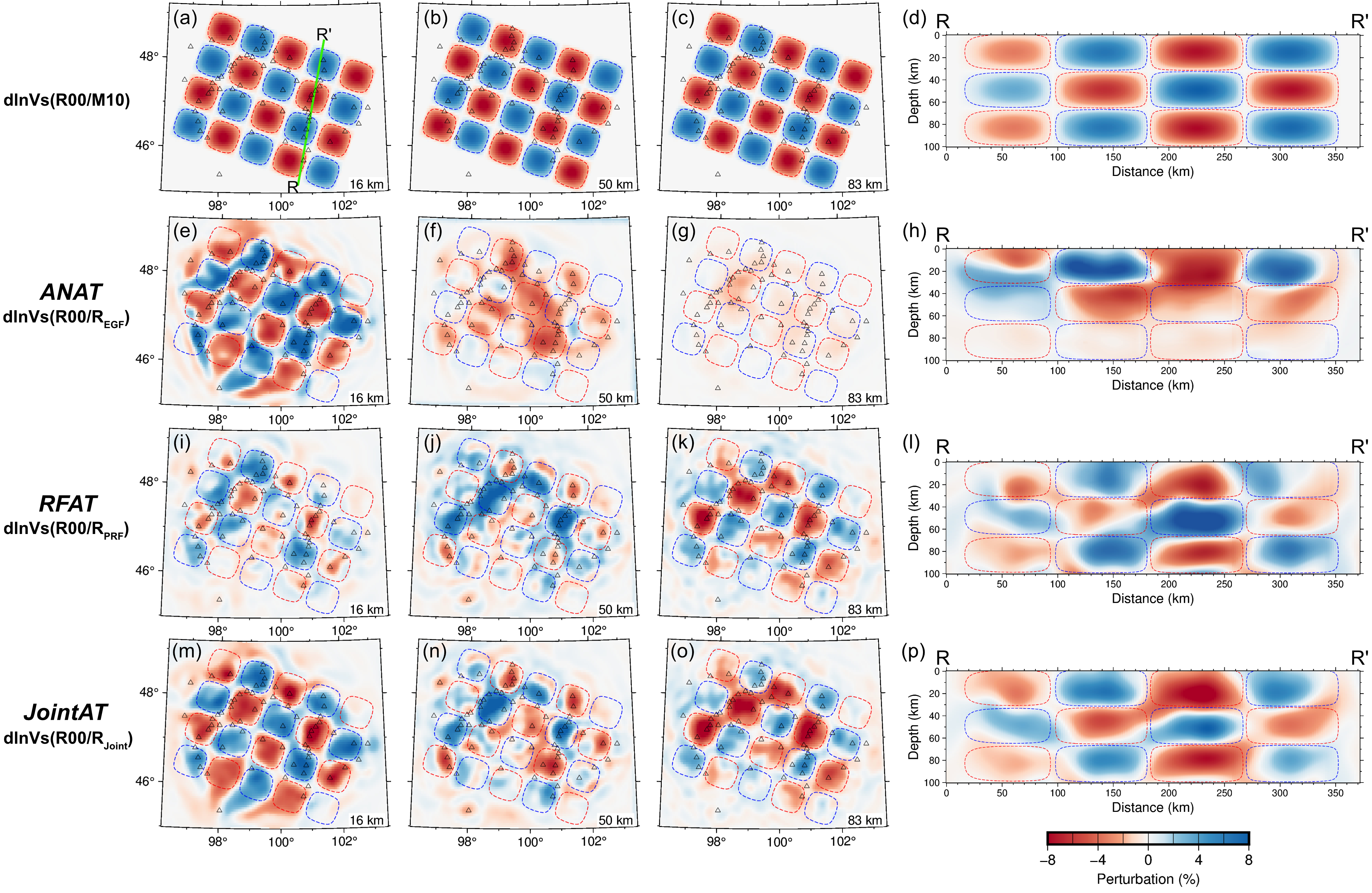
Figure 4: Resolution tests. Perturbations of R00 relative to the final model M10 (a–d), the model REGF derived from ambient noise adjoint tomography (e–h) (ANAT), the model RPRF obtained via receiver function adjoint tomography (i–l) (RFAT), and the model RJoint derived from adjoint waveform tomography integrating receiver functions and ambient noise data (m–p) (JointAT).
Multilevel Driving Mechanisms
Synthesizing our seismic images with geochemical data and geodynamic modeling, we propose a “Multilevel Mechanism” for the Hangay volcanism:
- Deep Trigger: Remnant volatiles from Mesozoic subduction slab stagnation trigger hydration and melting in the mantle transition zone/upper mantle.
- SCLM Heating & Melting: The thermal anomaly heats the overlying SCLM, inducing its partial melting.
- Magmatic Underplating: Magmatic Underplating at the lower crust form the observed crustal reservoirs with low-degree partial melting.
- Fracture & Eruption: Low-degree melts ascend through crustal fractures, leading to sustained low-volume volcanic activities.
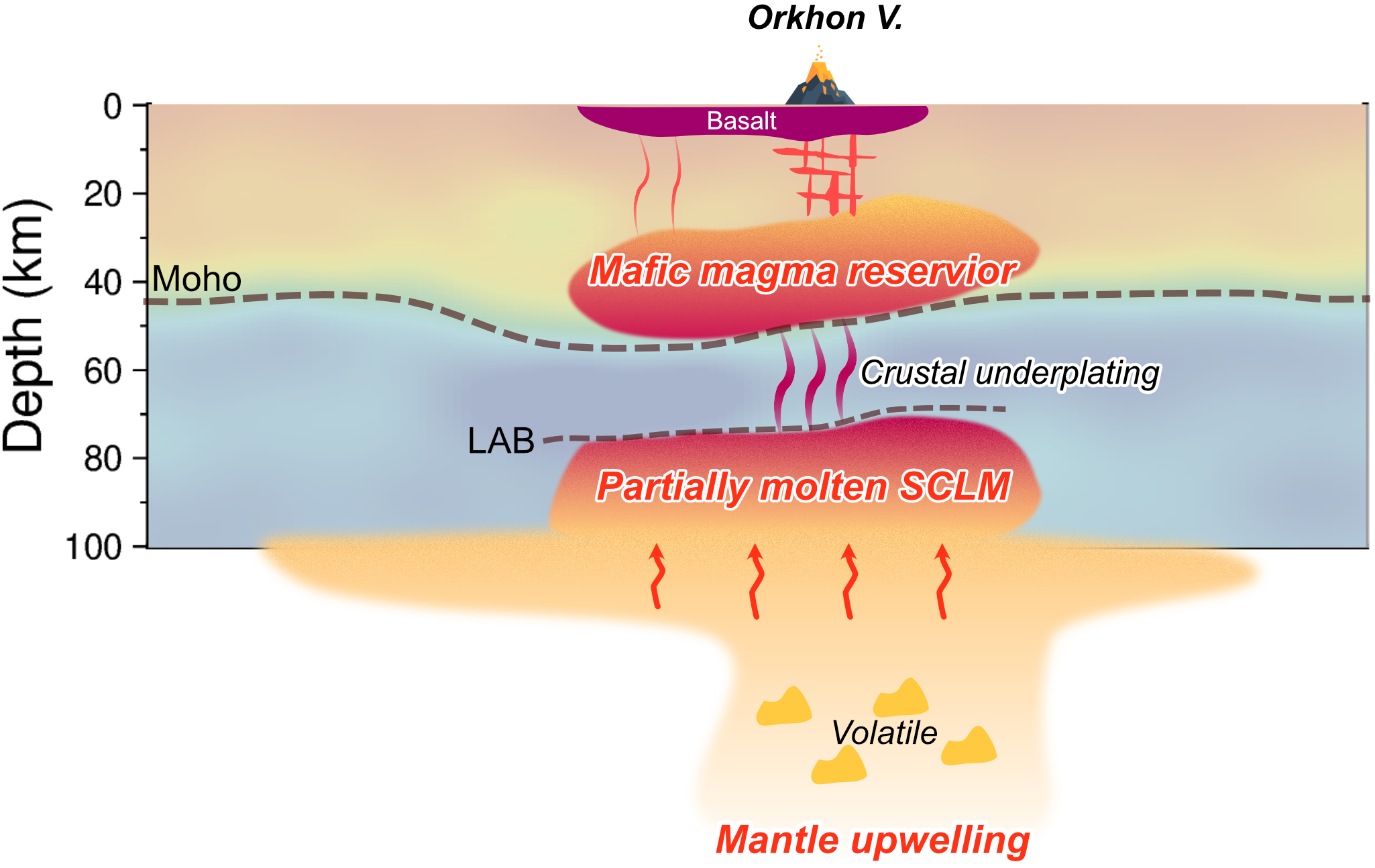
Figure 5: Schematic view of the magmatic system under the Hangay Dome along profile AA’.